
By Jordan Rys • March 23, 2026 • 10 min read

Let me say something that might get me in trouble with the audio plugin industry: you probably don't need that $400 plugin.
Creative voice effects are another place to buy for a specific job. Our pitch and formant comparison checks the current individual price, activation, and modes instead of assuming a bigger bill means a better result.
I've spent over a decade mixing vocals. I've used every major plugin suite on the market — FabFilter, Waves, iZotope, Antares, you name it. And after thousands of sessions and hundreds of released tracks, I can tell you something that most plugin companies really don't want you to hear.
The difference in vocal quality between a $200 plugin and a $20 one? It's maybe 5%. Sometimes less. The other 95% of what makes a vocal sound professional has absolutely nothing to do with which EQ or compressor you're running.
Now, before the gear heads come for me — I'm not saying expensive plugins are bad. They're not. Some of them are genuinely excellent. What I AM saying is that the gap between premium and affordable has collapsed, and most producers are spending money in the wrong places.
Let's break it all down.
The Premium Plugin Landscape in 2026
If you're mixing vocals today, the "industry standard" recommendations usually look something like this:
- EQ: FabFilter Pro-Q 4 — $179
- Compression: Waves CLA-2A — $249
- Vocal Processing: iZotope Nectar 4 — $249
- Pitch Correction: Antares Auto-Tune Pro — $399
That's $1,076 just to get started with vocal processing. And that's not even counting a de-esser, reverb, delay, or any specialty tools. A "complete" vocal chain from premium brands can easily run you $1,500 to $2,000+.
Are these good plugins? Absolutely. FabFilter's interface is beautiful. Waves has decades of analog modeling expertise. iZotope's AI-assisted processing is genuinely clever. Antares literally invented real-time pitch correction.
But here's where the conversation gets uncomfortable for those companies.
What You're Actually Paying For
When you buy a $179 EQ versus a $19 EQ, you're paying for a few things:
1. Brand Recognition
A significant chunk of premium plugin pricing is brand tax. FabFilter has spent years building a reputation, and their pricing reflects that positioning — not just the DSP quality. You're paying for the logo in your plugin chain.
2. Interface Design
Premium plugins tend to have more polished GUIs with real-time spectrum analyzers, dynamic EQ visualizations, and other visual features. These are genuinely useful for learning, but they don't change what comes out of your speakers.
3. Extra Features You Might Never Use
Most premium plugins are packed with features aimed at mastering engineers and post-production professionals. If you're mixing vocals for music production, you're probably using 30% of what these tools offer. The other 70% is dead weight you paid full price for.
4. The Actual DSP (The Smallest Part)
Here's the thing — EQ is EQ. A well-implemented parametric equalizer that boosts 3kHz by 2dB will sound essentially identical whether it costs $20 or $200. Compression algorithms have been well-understood for decades. The core signal processing in modern affordable plugins is genuinely competitive with the expensive stuff.
I'm not making this up. Blind listening tests consistently show that even experienced engineers struggle to reliably distinguish between premium and budget plugins when the settings are matched. The differences exist, but they're subtle enough that your listeners will never notice them on Spotify, Apple Music, or YouTube.
What Actually Matters More Than Your Plugins
If plugins account for maybe 5% of your vocal quality, what's responsible for the other 95%? Here's what I tell every producer who asks me why their vocals don't sound "professional" yet:
Room Treatment (Impact: Massive)
A $100 microphone in a treated room will destroy a $3,000 microphone in an untreated bedroom every single time. Room reflections, standing waves, and flutter echo bake problems into your recording that no plugin can fully fix. Before you buy another plugin, spend that money on acoustic panels, bass traps, or even thick moving blankets. Your vocals will improve more from $200 in acoustic treatment than from $2,000 in plugins.
Microphone Technique (Impact: Huge)
Distance from the mic, angle, pop filter placement, consistent positioning between takes — these fundamentals have more impact on your final vocal sound than any processing you'll apply later. Learn proper mic technique and you'll spend less time trying to "fix it in the mix."
Gain Staging (Impact: Significant)
Recording at the right level, maintaining proper gain structure through your signal chain, and not clipping your preamp — these basics are free and they matter enormously. No compressor plugin can save a recording that was clipped on the way in.
Arrangement and Production (Impact: Huge)
The number one reason amateur vocals sound amateur isn't the plugins — it's that the vocal is fighting the instrumental for space. Proper arrangement, frequency carving in your beat, and leaving room for the voice to sit naturally will do more for your vocal sound than any plugin chain ever could.
Mixing Skill and Ear Training (Impact: Everything)
A skilled engineer with stock DAW plugins will outperform a beginner with every premium plugin on the market. Every. Single. Time. Your ears, your taste, and your experience are your most valuable tools. Invest in learning before you invest in plugins.
The Price Comparison Nobody Wants You to See
Let's put real numbers side by side. Here's what a complete vocal processing chain costs from traditional premium brands versus what you'd spend with RysUp Audio plugins:
| Plugin Type | Premium Option | Price | RysUp Equivalent | Price |
|---|---|---|---|---|
| EQ | FabFilter Pro-Q 4 | $179 | RysUpEQ | $19 |
| Compressor | Waves CLA-2A | $249 | RysUpComp | $19 |
| Pitch Correction | Antares Auto-Tune Pro | $399 | RysUpTune | $29 |
| De-Esser | FabFilter Pro-DS | $149 | RysUpDS | $19 |
| Reverb | Valhalla VintageVerb | $50 | RysUpVerb | $19 |
| Delay | Soundtoys EchoBoy | $199 | RysUpDelay | $19 |
| Noise Gate | Waves NS1 | $149 | RysUpNoise | $19 |
| Air / Presence | Maag EQ4 (Plugin Alliance) | $149 | RysUpAir | $19 |
| TOTAL | $1,523 | RysUpSuite Bundle | $49 | |
Read that last row again. $1,523 versus $49. That's a 96% savings. And I'll say it plainly — for 95% of vocal mixing scenarios, the end result will be virtually indistinguishable to your listeners.

Where RysUp Plugins Fit In
I built the RysUp plugin suite specifically because I was tired of watching producers spend their rent money on plugins that were marginally better than affordable alternatives. Every RysUp plugin is designed with one philosophy: give producers the 95% that matters at a price that doesn't hurt.

RysUpEQ won't show you a real-time spectrum analyzer with 47 gradient colors. But it will give you a clean, precise parametric EQ that does exactly what you need for shaping vocals — surgical cuts, gentle boosts, and transparent high-pass filtering. The DSP is solid, the CPU usage is minimal, and the results speak for themselves.
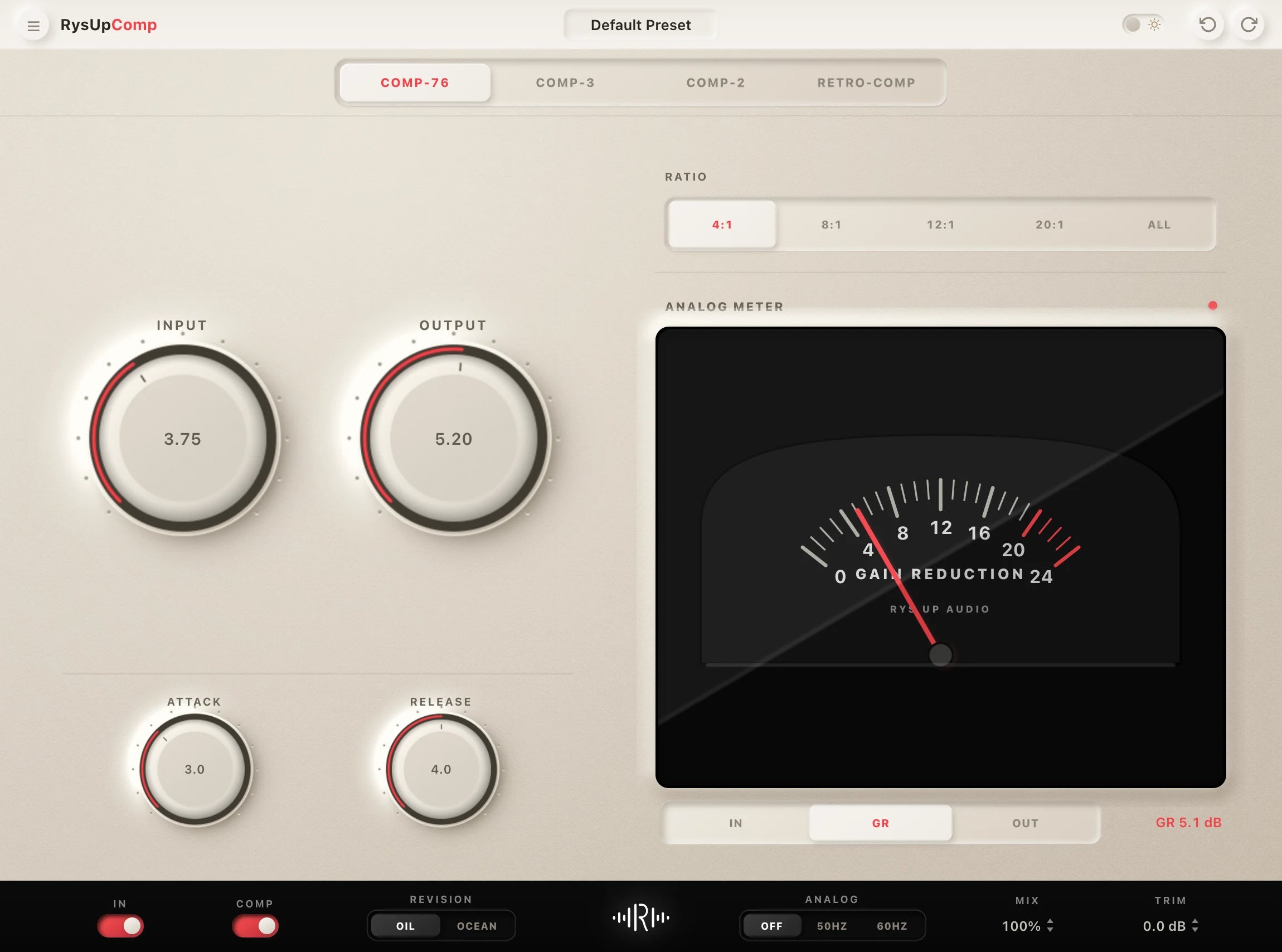
RysUpComp gives you smooth, musical compression that sits vocals perfectly in a mix. It's not trying to emulate a specific piece of vintage hardware — it's designed to sound good on modern vocal productions across hip-hop, R&B, pop, and everything in between.
The entire RysUpSuite bundle includes EQ, compression, pitch correction, de-essing, reverb, delay, noise reduction, air enhancement, multiband processing, and pitch shifting — all for less than the price of a single premium plugin. Every plugin works in FL Studio, Ableton, Pro Tools, Logic, Studio One, Cubase, Reaper, and GarageBand.
Download any of them from our plugin installer hub and try them in your next session.
When Expensive Plugins ARE Worth It
I want to be honest here, because credibility matters more than sales. There ARE situations where premium plugins justify their price:
- Professional mastering engineers who need the absolute highest fidelity and most transparent processing for final masters that will be pressed to vinyl or played on reference systems.
- Post-production for film/TV where specific broadcast standards and compliance tools are required.
- Studios billing $500+/hour where clients expect to see certain brands in the signal chain (yes, this is a real business consideration).
- Specific analog emulations where you need the exact character of a particular piece of hardware — like the specific saturation curve of an LA-2A or the transformer coloration of a Neve 1073.
But if you're a bedroom producer, an independent artist, a home studio mixer, or anyone making music for streaming platforms? The premium tax is almost never worth it for the incremental quality improvement you'll get.
The Smart Way to Spend Your Plugin Budget
Here's my honest recommendation for how to allocate your money if you want better-sounding vocals:
- Room treatment first ($200-500). Acoustic panels, bass traps, reflection filters. This is the single highest-impact investment you can make.
- A decent microphone ($150-300). An Audio-Technica AT2020 or Rode NT1 will serve you well for years. You don't need a $2,000 Neumann.
- An affordable plugin suite ($49). Something like the RysUpSuite bundle that covers all your bases without draining your account.
- Education ($0-100). YouTube tutorials, mixing courses, ear training apps. Learn to use what you have before buying more.
- Premium plugins last (if ever). Only after you've maxed out your skills with affordable tools and you can specifically identify what limitation you're hitting.
Total investment for genuinely professional vocal capability: under $1,000. Compare that to $2,000+ just on plugins from premium brands.
The Bottom Line
The plugin industry has a marketing problem disguised as a quality problem. Companies charge premium prices and use impressive GUIs, celebrity endorsements, and FOMO-driven sales to convince you that their tools are essential. And while those tools are genuinely good, the gap between "good" and "good enough" has never been smaller.
Your listeners on Spotify aren't hearing the difference between a $179 EQ and a $19 EQ. They're hearing whether your vocal performance was compelling, whether the recording was clean, and whether the mix gave the voice room to breathe.
Spend your money where it actually moves the needle. Treat your room. Learn your craft. Use tools that respect your budget. And put the savings toward what actually matters — making more music.
Pair Your Vocals With RysUp Plugins
If you want to upgrade your vocal chain, every plugin in the RysUp collection is built specifically for vocal production — modern codebase, weekly updates, no iLok, and a fraction of the cost of legacy software.


Frequently Asked Questions
Are free plugins good enough for professional vocal mixing?
Free plugins can work, but they often lack reliability updates, proper documentation, and consistent cross-DAW compatibility. A budget-friendly suite like RysUpSuite ($49 for everything) gives you professional-grade tools with ongoing support and compatibility across all major DAWs — a massive step up from free options without the premium price tag.
Will switching to cheaper plugins make my mixes sound worse?
Almost certainly not, as long as you're using well-designed affordable plugins. In blind tests, even experienced engineers struggle to tell the difference between premium and budget plugins with matched settings. The quality of modern affordable DSP is remarkably close to expensive alternatives. Your mixing decisions matter far more than your plugin choices.
What's the single most important thing for better vocal recordings?
Room treatment. By a wide margin. An untreated room introduces reflections, comb filtering, and resonances that no plugin can fully remove. Even basic acoustic treatment — panels at first reflection points and bass traps in corners — will dramatically improve your vocal recordings regardless of what microphone or plugins you use.
Do RysUp plugins work with my DAW?
Yes. Every plugin in the RysUp lineup is available as VST3 and AU, which means full compatibility with FL Studio, Ableton Live, Pro Tools, Logic Pro, Studio One, Cubase, Reaper, and GarageBand. Visit the installer hub to download for your platform.
Can I try RysUp plugins before buying the full bundle?
Individual RysUp plugins are available separately if you want to start with just one or two. But the RysUpSuite bundle at $49 gives you the entire collection for less than the price of a single plugin from most premium brands — it's the best value by far. If you have any questions before purchasing, reach out through our contact page.
Some jobs only need a free file tool, while others need an editable session. Our browser formant shifter comparison explains when either route makes sense before you spend money.
Choose the right tool before you buy
Ready to compare the actual options? Use our vocal compressor buyer guide and vocal EQ buyer guide to match the plugin to the job, budget, and workflow.
Start free before buying more plugins
When you are ready to compare paid starting points by DAW, genre, and artist direction, browse the complete vocal preset collection and keep every chain editable.
Try a complete free vocal chain first
You do not need another expensive processor to test a better starting workflow. Compare the free vocal preset collection for editable chains you can load, hear, and adjust inside your DAW.