
Build vocal layers by giving every track one role: lead, double, harmony, or ad lib. Record real doubles when you want human width. Add harmonies when the chord needs movement. Use generated voices when speed matters. Then remove layers until every word stays clear.
The mistake is not recording too few vocals. It is stacking six tracks that all sing the same line at the same level in the same place. A bigger hook needs contrast, not a wall of identical copies.
Rys Up Audio makes RysUpDoubler, RysUpHarmony, and the processors referenced below. The arrangement method works with recorded layers, stock tools, or third party plugins.
The fast answer
Start with one lead and one purpose for every additional track. If you cannot explain what a layer adds, mute it.
Build the arrangement before processing
Mark the sections that need lift. A verse may need only a lead and a few answers. A pre chorus can introduce one harmony. The hook can add doubles, a wider harmony pair, and selected ad libs. The final hook can add one new texture instead of making every existing layer louder.
This creates progression. If the full stack plays from the first bar, the song has nowhere to grow. Arrangement solves that before EQ, compression, or reverb enter the session.
Record and comp the lead first
The lead decides phrasing, consonants, timing, and emotion. Finish the comp before recording doubles. If the lead keeps changing, every support take will chase a moving target.
Edit obvious breaths, clicks, and timing problems, then let the singer hear the final lead while recording support parts. The goal is not robotic alignment. The goal is a shared phrase shape with enough variation to sound human.
Record real doubles for natural width
A real double is a second performance, not a copied lead. Ask the singer to match the vowels, consonants, note lengths, and phrase endings. Keep the emotion similar, but do not expect sample exact timing.
Use one centered or quiet double for density. Use two doubles panned left and right for width. If consonants smear, tighten only the most obvious starts and endings. Perfectly replacing every variation removes the reason to record a real double.
Create harmonies that follow the chord
Harmony parts sing different notes. Choose notes from the current chord instead of moving every phrase by the same fixed interval. A third may work over one chord and clash over the next.
Start with one upper or lower harmony on the strongest hook phrase. Then add another part only when the chord or melody needs it. Ableton's current layering tutorial demonstrates pitch shifted harmony voices, panning, subtle reverb, and automation, but the same musical decision applies to recorded singers and other DAWs.
Use ad libs as punctuation
Ad libs answer the lead. Put them in gaps, at line endings, or on transitions. A short callout can make the hook feel bigger without adding another full length layer.
Change the texture so the listener understands the role. Use more distance, darker EQ, extra delay, formant movement, or a wider pan. Keep the lyric owner obvious.
Choose recorded or generated layers deliberately
| Method | Best use | Strength | Watch for |
|---|---|---|---|
| Real double | Natural hook width and density | Human timing and tone variation | Loose consonants and phrase endings |
| Copied lead with delay or modulation | Fast support texture | Immediate and editable | Phase cancellation and obvious artificial motion |
| Generated harmony | Fast chord aware stack or creative effect | Repeatable voices and arrangement speed | Wrong key, wrong note choice, or synthetic artifacts |
| Recorded harmony | Natural ensemble and emotional lift | Real phrasing and vowel changes | Pitch and timing inconsistency across many takes |
Clean and bus the stack
High pass only what the layer does not need. Reduce low mid buildup when several voices sing together. De ess groups carefully because repeated S sounds can become much louder than the lead. Compress support parts enough to keep the stack stable, then route related layers to buses.
A double bus, harmony bus, and ad lib bus give you three useful faders instead of twelve loose tracks. Apply shared tone and space on the bus, then fix unusual problems on the individual track.
Pan by role, not by habit
Keep the lead centered. Pan a pair of real doubles left and right. Place harmonies in a narrower or wider pair depending on how much space the hook needs. Move ad libs to open gaps around the main phrase.
Check the stack in mono. If the hook becomes thin, the width may rely on phase differences instead of useful arrangement. Lower modulation depth, change timing, or keep one layer closer to the center.
Use space to separate the roles
The lead usually needs the shortest and quietest room so it stays close. Doubles can take slightly more room or delay. Harmonies can sit deeper. Ad libs can use obvious throws or longer tails when the arrangement leaves space.
Filter the reverb and delay returns so every layer does not rebuild the same low mid cloud. Automate effects into gaps instead of leaving full wet levels under every word.
Automate density by section
Do not leave the same stack active for the whole song. Mute doubles during the first verse, introduce one answer in the pre chorus, open the full pair in the hook, and save the extra harmony for the final repeat. The listener hears growth because the arrangement gains roles over time.
Volume automation matters as much as muting. Pull support parts down under dense lead phrases, then let them rise on sustained vowels or line endings. Automate reverb and delay sends separately so a harmony can move deeper without making the lead less direct.
Build a simple density map before the final mix: lead only, lead plus one support, full hook stack, and final hook variation. If every section lands in the full stack category, remove layers until the song has contrast again.
Where Rys Up fits
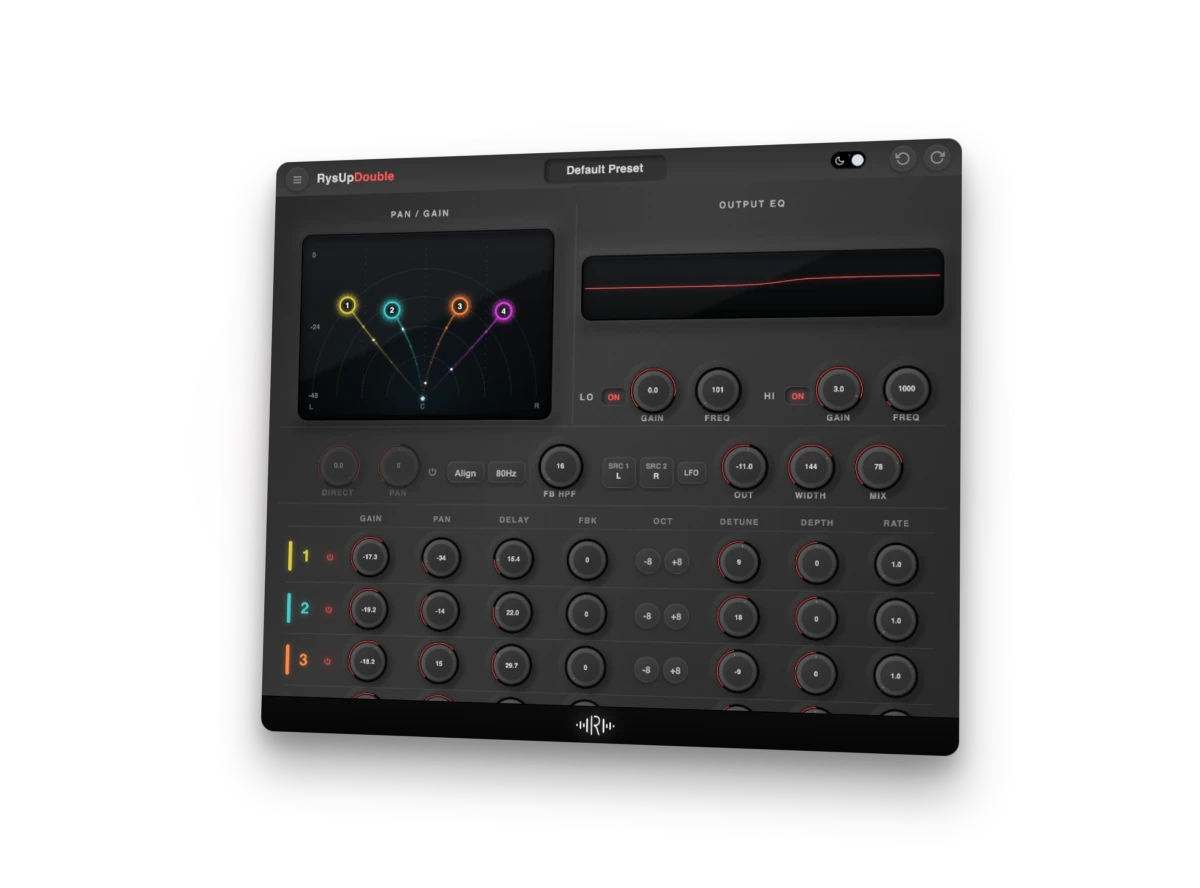
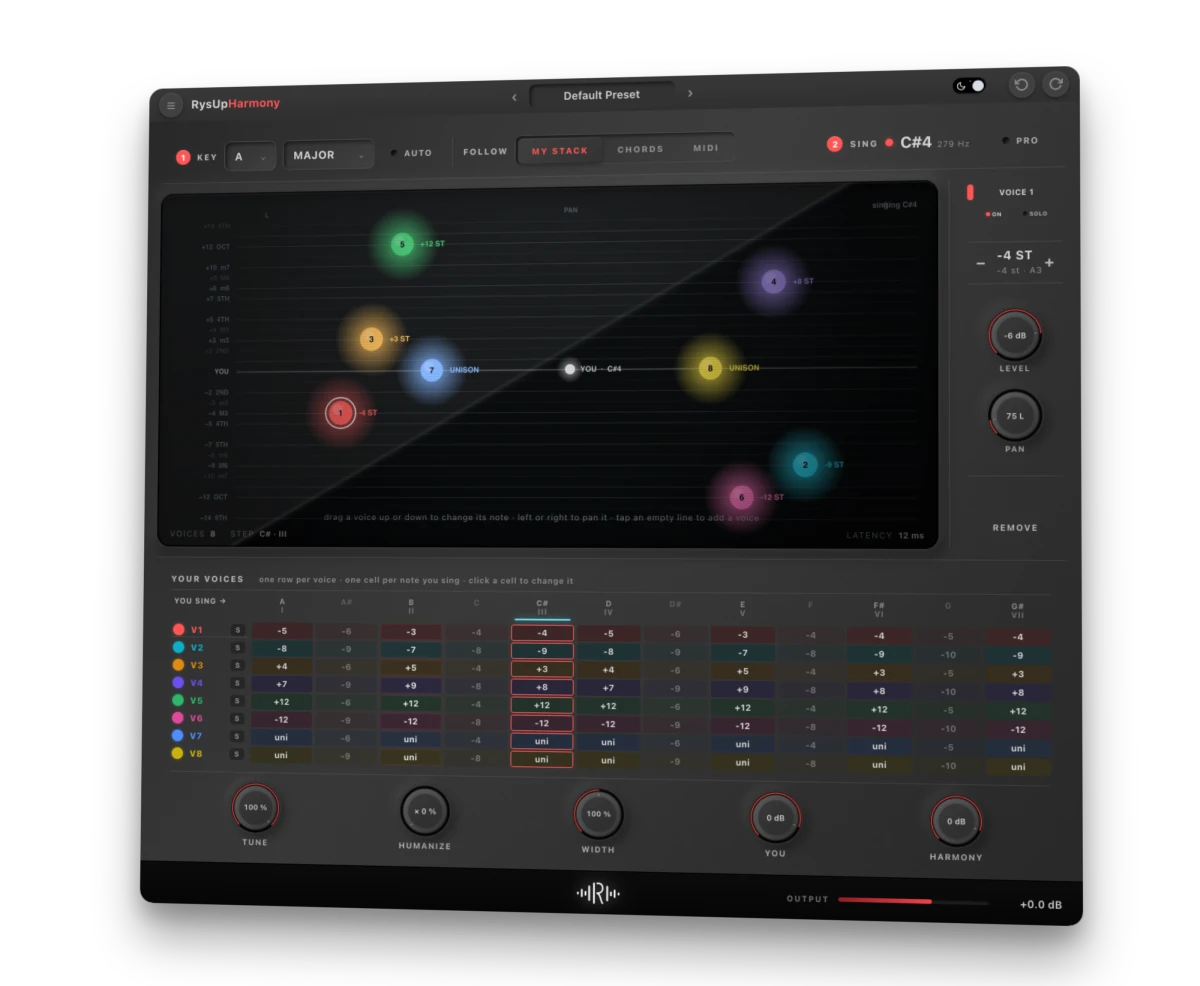
RysUpDoubler 1.4.7 creates four voice width and thickness for hooks, stacks, and doubles. RysUpHarmony 1.0.3 generates up to eight harmony voices that follow the incoming pitch and key. Both ship as AU, VST3, and AAX on macOS plus VST3 and AAX on Windows.
Use RysUpComp for shared density and RysUpDS when repeated consonants make the stack too sharp. RysUpSuite includes the current paid lineup for active subscribers.
Vocal layering checklist
- Finish the lead comp before recording support parts.
- Give every layer one role and one section purpose.
- Use real doubles for human width and generated voices for speed or effect.
- Choose harmony notes from the chord, not one fixed interval everywhere.
- Align obvious starts and endings without erasing all variation.
- Bus doubles, harmonies, and ad libs separately.
- Check consonants, low mid buildup, and mono compatibility.
- Mute layers until the lyric becomes clear, then add back only what helps.
The final rule
Layering is arrangement before processing. Keep the lead clear, make doubles support impact, make harmonies support the chord, and make ad libs support the space between lines. More tracks are useful only when they create a role the song did not already have.
Primary sources checked September 17, 2026: Ableton vocal layering tutorial, current Rys Up Hub catalog, and the live RysUpDoubler, RysUpHarmony, RysUpComp, and RysUpDS product pages.