
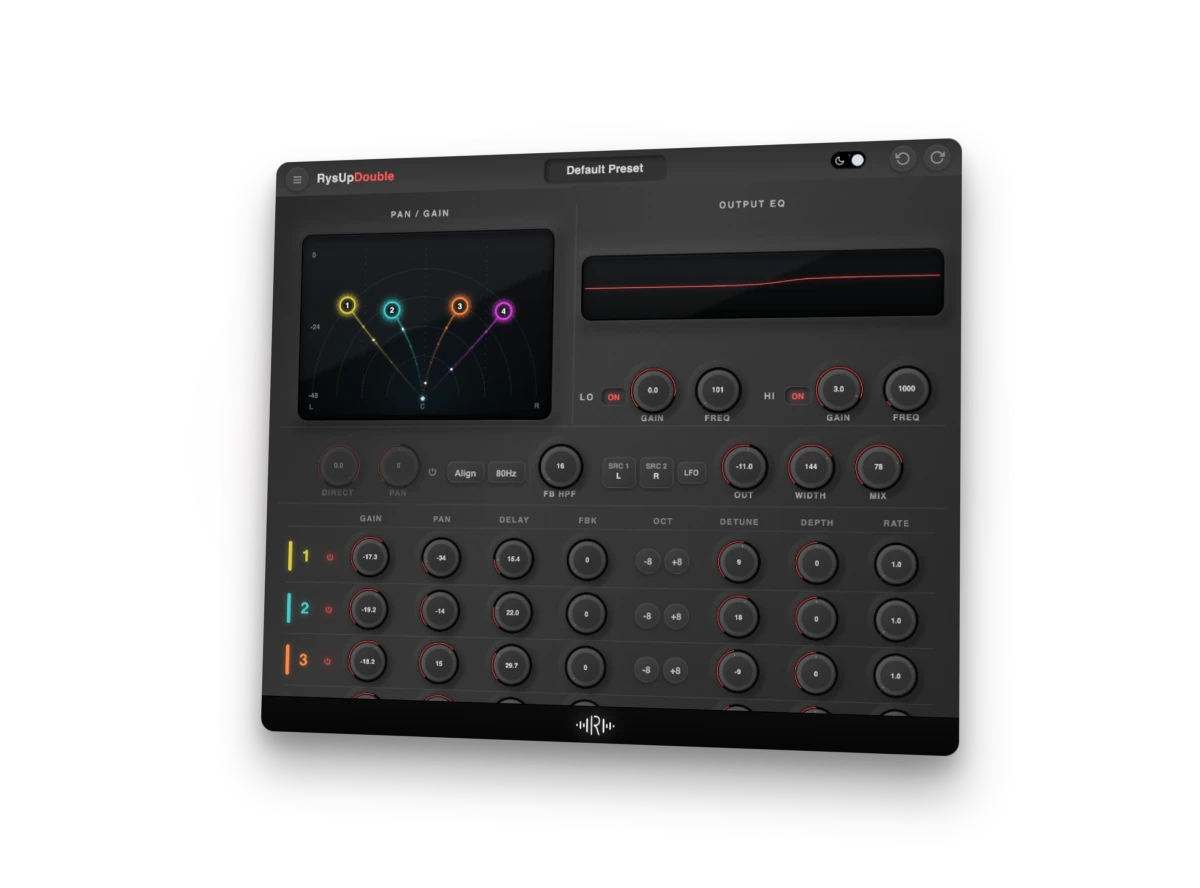

The best vocal doubler plugin depends on what you actually need. If the budget is zero, iZotope Vocal Doubler is the obvious place to start. If you want fast, polished stereo width, Soundtoys MicroShift is hard to argue with. Waves Doubler gives you a familiar four-voice editor. Eventide MicroPitch is better for creative pitch-delay movement. RysUpDoubler is the lower-priced four-voice option for producers who want detailed voice control without iLok.
A phone app captures or arranges the performances. A plugin processes them later. Our vocal layering app guide explains where those jobs meet and where they stay separate.
There is no honest universal winner here. A doubler that sounds great on a sung hook can make a close rap vocal blurry. The right choice is the one that creates width or thickness while keeping the lead intelligible and stable in mono.
Disclosure: Rys Up Audio makes RysUpDoubler. Competitor features, formats, and prices below were checked against official product and support pages on July 17, 2026. Rys Up Audio has not been paid by the other companies in this comparison.
Read mono capture and stereo width are different jobs before choosing the next processing move.
The best vocal doubler plugins at a glance
- Best free option: iZotope Vocal Doubler.
- Best fast hardware-style width: Soundtoys MicroShift.
- Best established four-voice editor: Waves Doubler.
- Best creative dual-voice pitch delay: Eventide MicroPitch.
- Best lower-priced four-voice vocal workflow: RysUpDoubler.
Start with the free iZotope plugin if you do not yet know what controls you need. Buy MicroShift when speed and a specific polished width matter more than editing each voice. Choose Eventide for modulation, feedback, and delay effects that move beyond basic doubling. Choose RysUpDoubler when you want four editable voices, vocal-focused presets, and a simpler RysUpHub license path at $49.99.
Vocal doubler plugin comparison
| Plugin | Price checked July 17 | Voice design | Best for | Main tradeoff | Desktop formats |
|---|---|---|---|---|---|
| iZotope Vocal Doubler | Free | Simplified doubling with Separation, Variation, and Amount | Fast, free width with very little setup | Far less per-voice control than the paid options | Mac and Windows; AU, AAX, VST2, VST3 |
| Soundtoys MicroShift | $99 | Three widening styles using pitch shift and time-varying delay | Quick, smooth stereo width | Not a detailed four-voice editor | Mac and Windows; AU, AAX Native/AudioSuite, VST2, VST3 |
| Waves Doubler | $99 list; $34.99 sale snapshot | Up to four voices with pitch, delay, feedback, filtering, and panning | Detailed classic doubling and harmonizer work | Sale pricing changes frequently | Current formats and hosts vary by Waves version; check the official compatibility page |
| Eventide MicroPitch | $99 list; $49 sale snapshot | Two detuned voices with delay, modulation, feedback, and tone | Creative stereo pitch-delay movement | Two voices rather than four; iLok account required for activation | Mac AU, AAX, VST2, VST3; Windows AAX, VST2, VST3 |
| RysUpDoubler | $49.99 ownership | Four voices with independent detune, delay, modulation, pan, gain, and mute | Modern four-voice vocal work without iLok | No feedback network or long delay effects like MicroPitch | Mac AU, VST3, AAX; Windows VST3, AAX |
Sale prices are snapshots, not promises. Soundtoys, Waves, Eventide, and Rys Up Audio can change offers after this article is published. Check the official cart before buying.
1. iZotope Vocal Doubler: best free vocal doubler plugin
iZotope Vocal Doubler is the sensible first download for most producers. It is free and reduces the problem to a few controls: Separation changes how spread out the doubles feel, Variation changes the pitch and timing behavior, and Amount controls the blend. There is also an Effect Only mode for parallel routing.
That simplicity is useful. You can put it on a background vocal, move the controls until the layer opens up, and return to the mix. It is also a good way to learn whether synthetic doubling belongs in your workflow before buying another plugin.
The limitation is control. You cannot edit four voices independently, choose a detailed delay for each side, or rebalance individual layers. If the free plugin already gives you the width you need, that limitation does not matter. Keep it and spend the money somewhere else.
2. Soundtoys MicroShift: best for instant polished width
MicroShift is not trying to show you four fake singers. It is a focused stereo widener built around small pitch changes and time-varying delay. Soundtoys gives you three styles, then a short set of controls for Focus, Detune, Delay, Mix, and output level.
That makes it strong on lead-vocal sends, background stacks, synths, and guitars. The Focus control is particularly useful when the widening makes the low mids feel unfocused. You can keep the body closer to the center while letting the brighter information spread.
MicroShift is the better choice when you want its specific smooth, hardware-inspired sound and do not want to program individual voices. It is the weaker choice when you need separate pan, gain, mute, delay, and modulation controls for four layers.
3. Waves Doubler: best established four-voice editor
Waves Doubler remains relevant because the basic design still makes sense. It can create up to four additional voices and lets you adjust pitch, delay, feedback, filtering, panning, and level. That covers subtle thickening, obvious spread, chorus-like motion, and simple harmonizer effects.
The current sale snapshot was $34.99 against a displayed $99 list price. At that sale price, it can be the lowest-priced detailed four-voice option in this comparison. Waves pricing changes often, so do not build a buying decision around a temporary discount without checking the live page.
If you are comparing only these two four-voice options, read the separate RysUpDoubler vs Waves Doubler comparison before deciding.
4. Eventide MicroPitch: best for creative pitch-delay movement
Eventide MicroPitch starts with two detuned voices: one can shift downward by up to 50 cents and the other upward by up to 50 cents. It then adds up to two seconds of delay, modulation, feedback, tone shaping, and tempo sync.
That makes it broader than a plain doubler. It can create a tight stereo lift, a moving chorus, rhythmic repeats, or a pitch-delay effect that becomes part of the production. It also runs on iOS in addition to desktop formats.
MicroPitch is the better option here when you want effects that evolve beyond a static double. It is not the best fit if your priority is four separately placed voices. Eventide's store states that an iLok account is required for activation, which may matter if you are trying to avoid adding another license system.
5. RysUpDoubler: best lower-priced four-voice vocal workflow
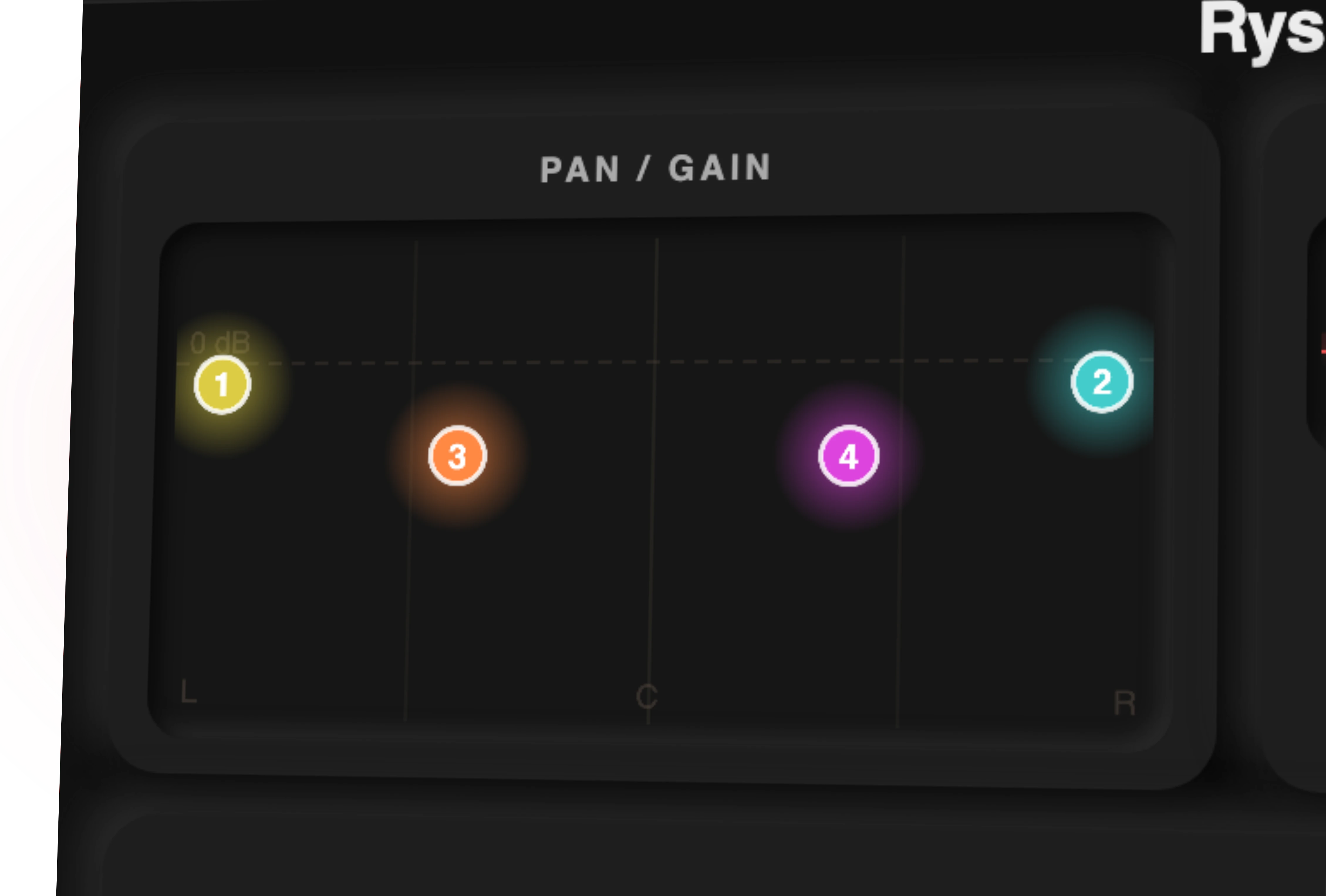
RysUpDoubler creates four voices around the source. Each voice has its own pitch detune up to plus or minus 50 cents, delay, modulation depth and rate, pan, gain, and mute. The output section adds a two-band EQ, stereo width, wet/dry control, and direct-signal pan. Vocal, Instrument, and Wide modes provide practical starting points.
The current public update feed lists version 1.3.9. Mac installers include AU, VST3, and AAX. Windows installers include VST3 and AAX. The plugin costs $49.99 to own, installs through RysUpHub, and does not require iLok.
RysUpDoubler is not a MicroShift clone and does not have Eventide's long feedback-delay design. Buy it when independent voice placement matters. Skip it if iZotope's free controls are enough, if you want MicroShift's specific width sound, or if MicroPitch's creative delay network is the real reason you are shopping.
How to test a vocal doubler plugin properly
- Use the same dry vocal. Pick one verse line, one loud hook line, and one sustained word. Loop all three during the test.
- Match output level. A louder doubler will usually feel wider and better for the wrong reason.
- Check the center. Bypass the effect and listen for any loss of focus when it returns. Lead words should still feel anchored.
- Listen in mono. Collapse the mix and check whether the vocal gets hollow, thin, or dramatically quieter.
- Test inside the full beat. A beautiful solo width can disappear behind guitars, keys, or wide synths.
- Compare an insert with a send. A parallel aux often gives better control than putting the whole lead through the effect.
- Turn it down. Once the double is obvious, reduce the wet level until you miss it when bypassed but do not hear it as a separate effect.
For a fair four-voice comparison, start every voice near unity, keep detune modest, stagger delays rather than copying one value, then pan the voices in pairs. For MicroShift or iZotope, aim for the same perceived width and level instead of trying to match controls they do not expose.
When a real double is better than a plugin
A second performance is still the better choice when you want natural timing changes, different consonants, emotional variation, or a large chorus stack. A plugin copies the same performance and alters it. That can create convincing width, but it cannot invent a genuinely different delivery.
A distinct echo is a different job from a double. Use a dedicated vocal delay such as RysUpDelay when you want audible repeats, then compare that result with the width of a doubler. Check the combination in mono before keeping both.
Record a real double when the song depends on the sound of two performances. Use a plugin when the singer is gone, the session needs speed, the double should behave like an effect, or the real take needs extra support. Many finished vocals use both: real layers for character and a subtle synthetic double for width.
Which vocal doubler should you choose?
If you are building more than a width effect, compare the vocal mixing plugin collection for the rest of the chain. Keep the doubler choice tied to the actual vocal rather than a plugin count.
- Choose Eventide MicroPitch when creative modulation, feedback, and delay are part of the sound.
- Choose RysUpDoubler when you want four independently placed voices, vocal-focused controls, $49.99 ownership, and no iLok.
Download the free option and demos first. Level match them. Check mono. Keep the plugin that makes the vocal easier to finish, even if it is not the one a roundup ranked first.
Try RysUpDoubler on your next vocal
Own RysUpDoubler for $49.99, or get it with the RysUpSuite if you want the wider plugin catalog. Both use the same RysUpHub customer path.
Chorus and doubling solve different kinds of width. Compare the best chorus plugins when you want continuous movement instead of separate doubled voices.
Sources checked July 17, 2026
- RysUpDoubler product page and live RysUpDoubler update feed
- iZotope Vocal Doubler official product page, official support format table, and Apple silicon compatibility table
- Soundtoys MicroShift official product page
- Waves Doubler official product page
- Eventide MicroPitch official product page and official Eventide store activation notice
Features, compatibility, prices, and offers can change after the source check date. Confirm the current product page and system requirements before purchasing.
Width and glitch movement solve different jobs. For chopped fills and moving repeats, compare beat repeat and stutter tools.
Need movement instead of extra voices? Compare a focused chorus and phaser workflow before stacking another doubler.
Want a robot voice instead of natural width? Use this online vocoder versus DAW plugin decision before adding another layer.
Already chose a doubler? Follow this vocal widening workflow to protect the lead, blend the sides, and survive mono.
Comparing a simple widener with a four voice stack? Read the focused vocal doubler comparison before choosing.
Width settings matter most in a full arrangement. Follow this ad lib placement workflow to keep the supporting voices wide while the lead stays centered.
The bottom line
Every plugin on this page does the job. Only one of them is RysUpDoubler — one price, paid once, no subscription and no dongle.
Doubles already wide but the mix still feels narrow? RysUpImager handles width, rotation and mono checks on the bus for $9.99. More in our stereo imager roundup.